What is overtone flute
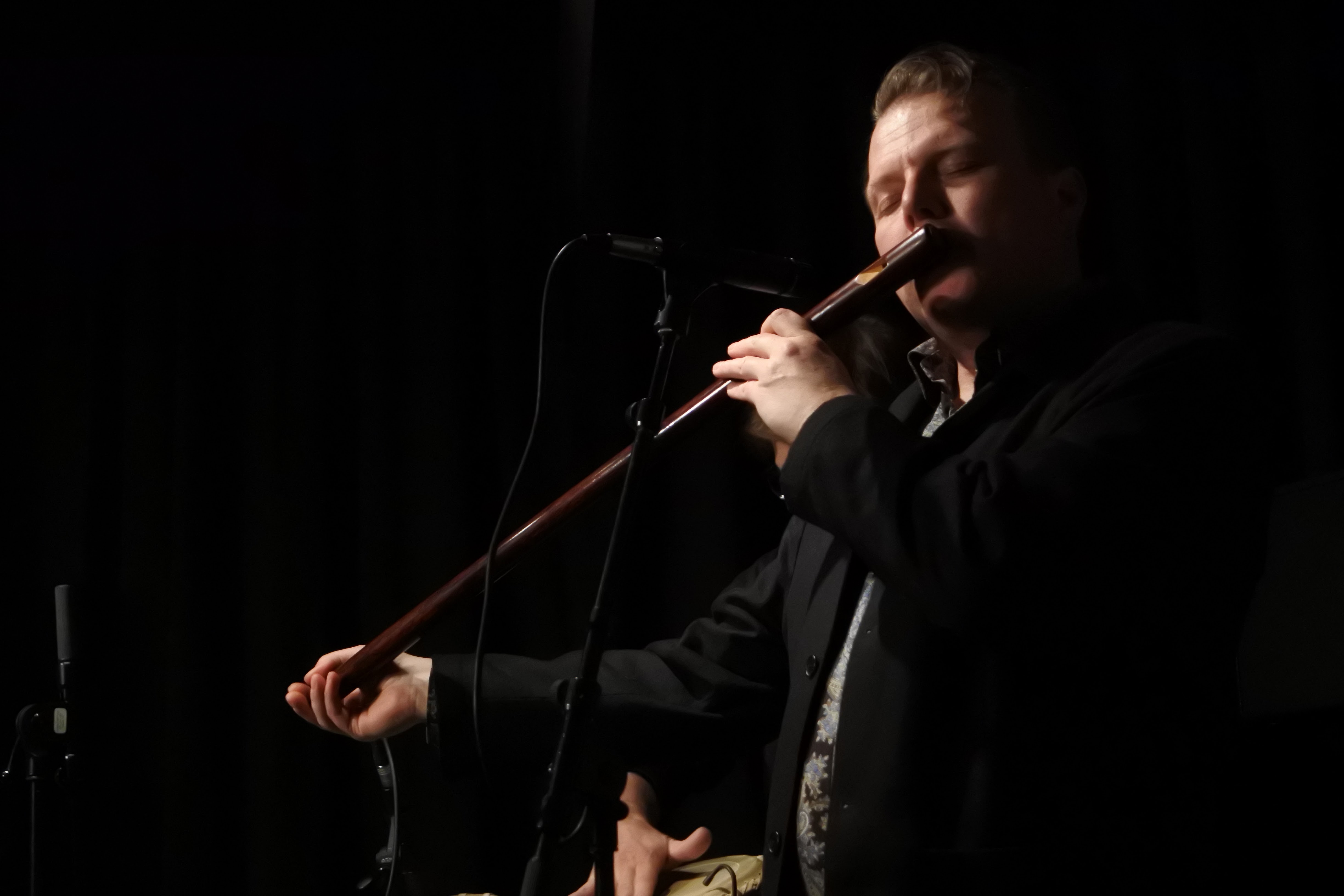
Tapani Varis. Photo by Jorma Airola
The traditional Finnish overtone flute, known as "Pitkähuilu", is a side-blown instrument that is closed at one end and open at the other, featuring no finger holes. It goes by numerous local names in Finland, reflecting its rich folk heritage, such as lötkö, pajuhuilu, pajupilli, and luonnonsävelhuilu.
Similar fingerhole-free overtone flutes appear across diverse cultural traditions globally. Examples include the seljefløyte in Norway, sålgflöjt in Sweden, pikkvile in Estonia, as well as various natural and willow bark flutes found across European and international folk traditions. Their specific cultural roles can range from pastoral signaling to ceremonial uses.
Historically, these instruments could be crafted without advanced metal tools—traditionally carved from spring tree branches by detaching bark using basic methods. This suggests that instruments of this type have ancient origins spanning millennia.
While organic wooden specimens from deep antiquity do not survive today, historical accounts confirm that pitkähuilu playing was active among shepherds and rural communities in Finland during the 19th and 20th centuries for personal enjoyment and entertainment.
Professional Finnish musicians began incorporating the overtone flute into modern contexts during the 1970s, notably appearing on recordings like Piirpauke's second album. Pioneers such as Rauno Nieminen also organized widespread instructional and crafting initiatives to preserve and promote the tradition.
Today, innovations in durable materials—such as synthetic and bass variants—have expanded the instrument's longevity and musical range. Overtone flutes are now taught across various educational tiers, from community music schools and conservatories to the Sibelius Academy and specialized folk music camps.
© Janne Ojajärvi