Overtone flute scale
The scale of an overtone flute is inherently tied to the harmonic series—a acoustic phenomenon also utilized in overtone singing and mouth harp traditions. Traditional Nordic melodies typically revolve around the upper register, particularly near the 8th overtone.
While varying breath pressure alone can theoretically traverse the harmonic scale, doing so across higher partials can result in excessive volume and high pitch. By alternating between an open and closed distal end, players can access a balanced and musically pleasing scale. Furthermore, partially closing the end (such as to half or three-quarters) expands the tonal possibilities even further.
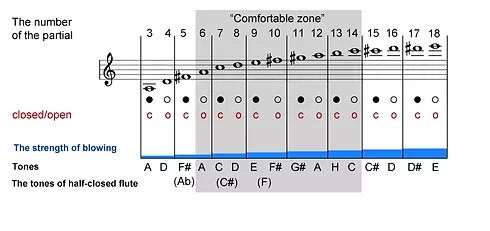
Comfortable zone and harmonic partials overview
D overtone flute scale
Because natural harmonic tunings differ slightly from equal temperament systems (such as a standard piano), higher register notes will exhibit natural tuning variations when played alongside fixed-pitch instruments. However, the distinct timbre of the flute often blends harmoniously regardless, leaving room for artistic preference and accompaniment experimentation using the resources available on this site.
You can also explore interactive tones using the virtual player.
Sources:
Joutsenlahti, R.-L. 2000.
Yvert, J-P. 1996.
© Janne Ojajärvi